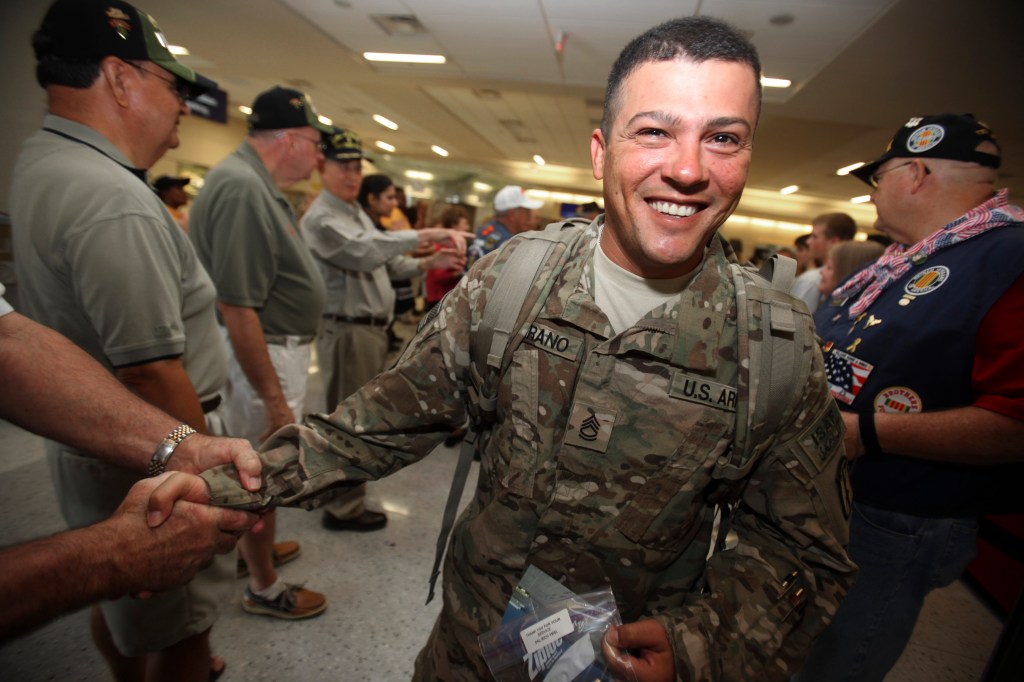
“Thank you for your service.”
How do you feel when someone says that to you?
Former Marine Hunter Garth is not a fan. Neither is former Green Beret Mike Freedman, who described it as the “thank you for your service phenomenon” in an article Sunday in the New York Times.
The article’s author, Matt Richtel, writes about how he thanked Garth for his service shortly after meeting him for a story on a different topic and was surprised by Garth’s reaction.
“I could see it from the way he looked down,” Richtel wrote. “And I could see it on the faces of some of the other vets who work with Mr. Garth when I thanked them too. What gives, I asked? Who doesn’t want to be thanked for their military service?”
To some, it seems, the phrase comes across as “shallow, disconnected, a reflexive offering from people who, while meaning well, have no clue what soldiers did over there or what motivated them to go, and who would never have gone themselves nor sent their own sons and daughters,” Richtel wrote.
The thanks “alleviates some of the civilian guilt,” Freedman told Richtel.
Has someone ever thanked you for your service? How did you react? Do you agree with Garth and Freedman, or have a different stance? Send your comments to Military Times senior staff writer Michelle Tan at mtan@militarytimes.com.