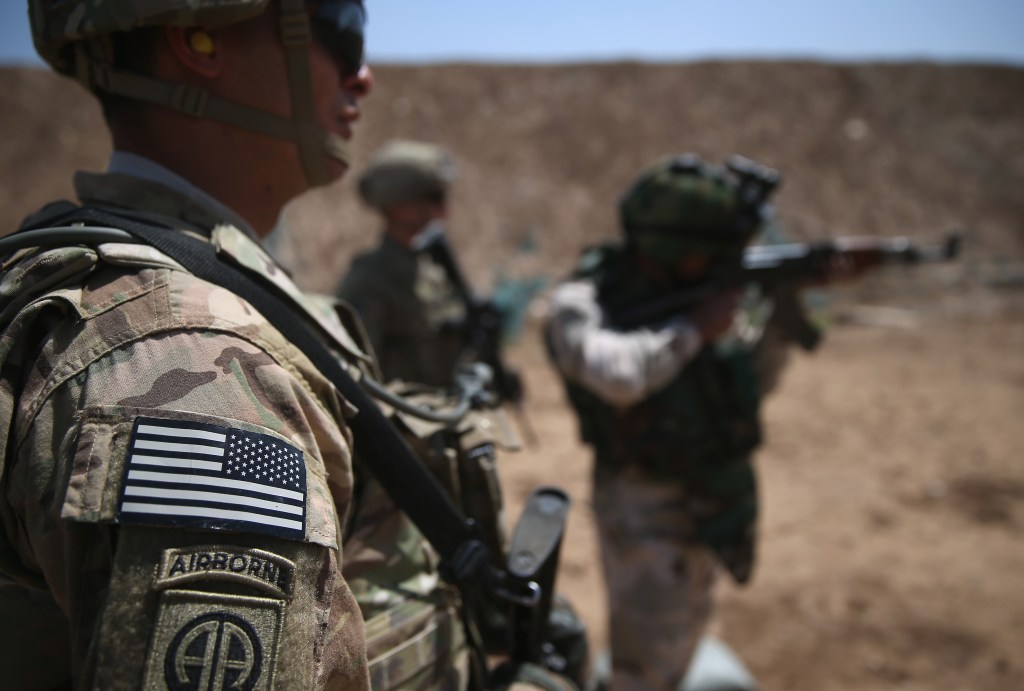
A government audit released this week highlights continued Army failures to track U.S. weapons and other equipment being delivered to the Iraqi military.
Amnesty International obtained the 2016 Defense Department Inspector General report, which reveals more than $1 billion in rifles, vehicles and ammunition were not properly tracked and accounted for.
The human rights organization released the report on Wednesday with a statement:
“This audit provides a worrying insight into the U.S. Army’s flawed – and potentially dangerous – system for controlling millions of dollars’ worth of arms transfers to a hugely volatile region,” said Patrick Wilcken, Amnesty International’s arms control and human rights researcher.
According to Amnesty International, the military transfers came under the Iraq Train and Equip Fund, which is designed to facilitate the transfer of equipment to the Iraqis and is described by Amnesty as “a linchpin of U.S.-Iraqi security cooperation.”
The group added that the equipment transfers included tens of thousands of assault rifles, hundreds of mortar rounds and hundreds of armored Humvees destined for the Iraqi army and Kurdish peshmerga forces.
In response, Amnesty says, DoD officials have “pledged to tighten up its systems for tracking and monitoring future transfers to Iraq.”
But, Amnesty notes, military leaders made the same pledge following a 2007 U.S. Government Accountability Office report that had similar findings.
Among other items, the 26-page report highlights the following deficiencies:
- A broken record-keeping system at installations in Iraq and Kuwait, pointing to equipment information in multiple spreadsheets, databases and hand-written notes.
- Equipment information was manually entered into multiple spreadsheets, elevating the risk of human error.
- Incomplete records resulting in equipment custodians who could not provide the status or location of the items.
The potential for missing equipment to land in the hands of adversaries is the main concern for Amnesty officials, Wilcken said.
“It makes for especially sobering reading given the long history of leakage of U.S. arms to multiple armed groups committing atrocities in Iraq, including the armed group calling itself the Islamic State,” he said.