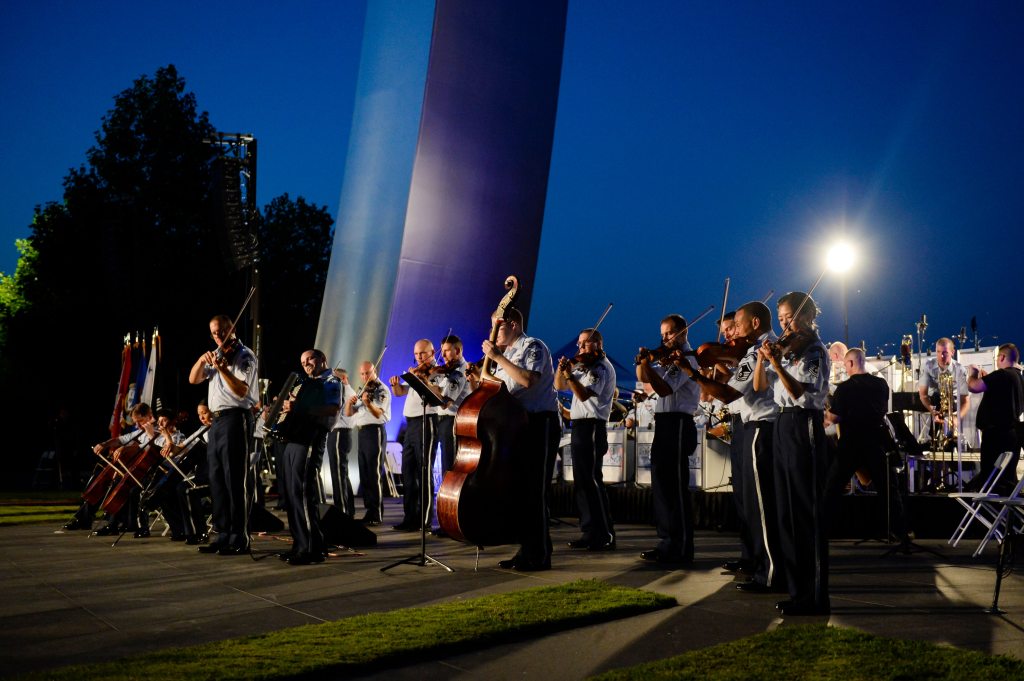
An ensemble of House lawmakers is lobbying colleagues to drop proposed restrictions on military band performances starting next year, calling the musical acts invaluable tools for the armed forces.
The fight stems from language inserted into the House draft of the defense spending bill passed earlier this year. Under the plan, no performance funds would be cut, but service musicians’ would not be allowed to perform at “social events,” including a host of nonmilitary community celebrations.
Official military performances, such as command ceremonies and funerals, would not be affected.
In a letter obtained by Politico this week, 11 lawmakers — mostly Democrats — urged leaders on the House Appropriations Committee to reconsider the proposal and drop the planned restrictions.
“Military musicians are among the most talented, accomplished and respected in the United States,” they wrote. “In choosing to perform in uniform, they exemplify service as emissaries of the armed forces. We should be doing everything we can to promote and support the ensembles they are part of.”
Military bands have been a controversial expenditure for years, with supporters extolling their recruiting and public relations value and critics decrying their cost.
According to Defense Department estimates, military bands spend about $437 million on instruments, uniforms and travel expenses each year. Critics have argued that many of those costs could be slashed by turning over performances to qualified civilian bands, and keeping defense funds geared toward more pressing priorities.
But a host of independent arts education groups have implored House leaders not to restrict or eliminate the bands, and the lawmakers arguing on their behalf said the musical acts together reach more than 1 billion audience members annually.
“We believe the outreach provided by the members of these ensembles, through thousands of performances per year and music education programs in schools across the country, is more important than ever,” they wrote.
For now, much of the argument is moot. The defense spending measure is stalled in the Senate over larger budget fights, and senators have not taken a strong stance on the proposed restrictions.
Unless a compromise on the larger funding issues can be brokered between Republican and Democratic lawmakers, the new military band performance rules won’t become law.
Congress is also considering a full review of military band operations and spending as part of the annual defense authorization bill. That measure is in House-Senate negotiations and is expected to be signed into law this fall.
Follow @LeoShaneLeo Shane III covers Congress, Veterans Affairs and the White House for Military Times. He can be reached at lshane@militarytimes.com.