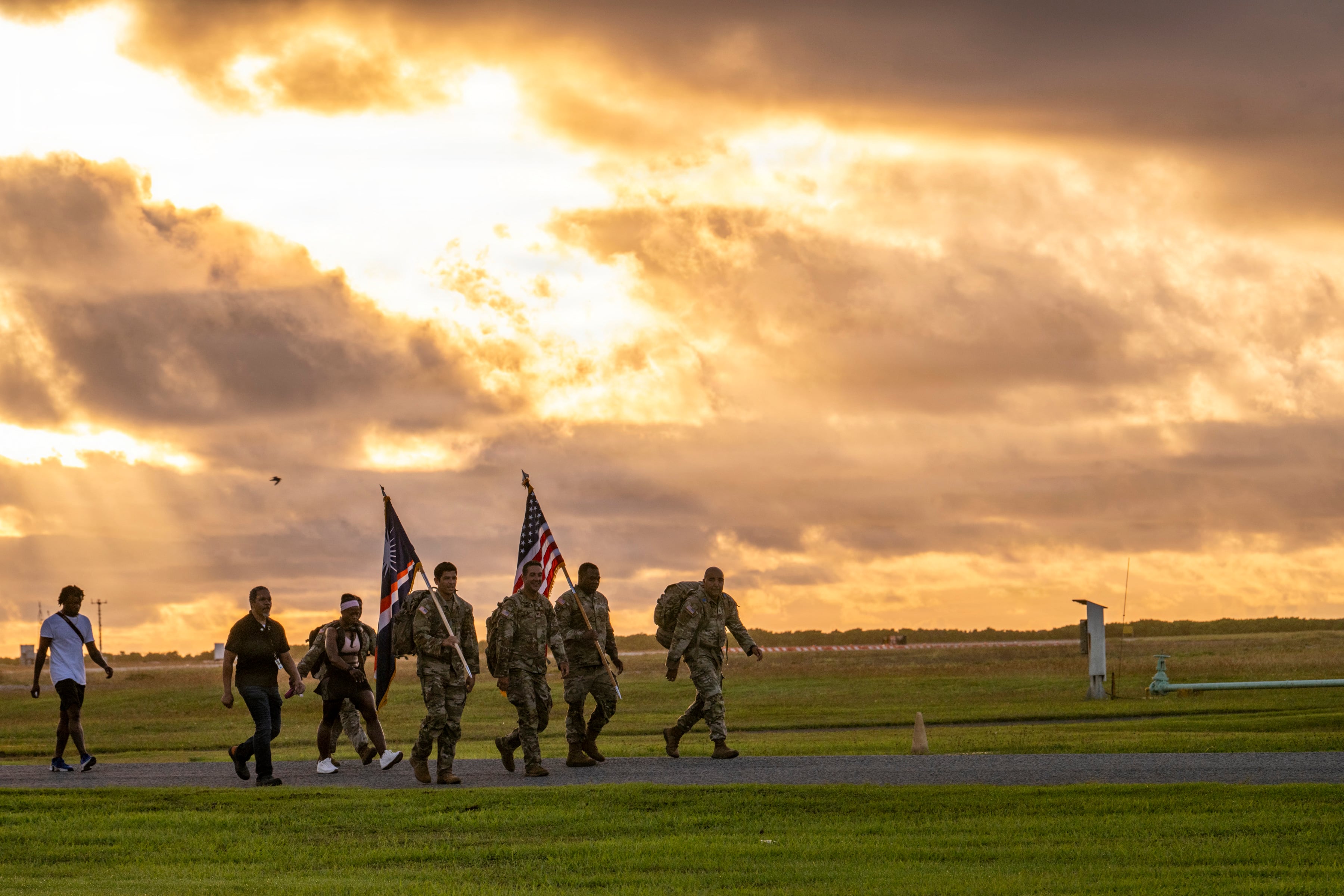
UNDISCLOSED LOCATION, Southwest Asia — Whether it's helping an Army team check out an airfield the military might use, unloading cargo in an austere location, or helping an Iraqi unit coordinate with allies, hundreds of airmen throughout the Middle East are providing their expertise to other services and coalition partners.
The Air Force has about 300 joint expeditionary tasked-individual augmentee airmen, from more than 60 different career fields, embedded with units scattered across 11 countries, said Maj. Sonja Gurski, director of operations for the 387th Air Expeditionary Squadron.
"When there is a joint staff where they need Air Force expertise, we send our representatives ... to help advise," Gurski said. "Or, if there is another component that is short a capability because they have already exhausted their manpower, the Air Force will provide some of that expertise to help fill in the gaps."
Gurski said that the JET-IA airmen include everyone from airmen first class to, in some cases, general officers. They fill a wide variety of roles, and work for about five or six different higher headquarters, she said.
For example, she said, joint air component coordination element airmen sometimes hit the field embedded with Army logisticians to survey airfields.
The JACCE members might be looking at the kinds of aircraft a particular airfield could accommodate, what the potential might be for that airfield, or the modifications that would be needed so certain types of aircraft could use it, Gurski said. "It is typically a small team that includes some JACCE members [including] engineers and logisticians, and then they would all bring back ... [the] information they collected at that particular airfield."
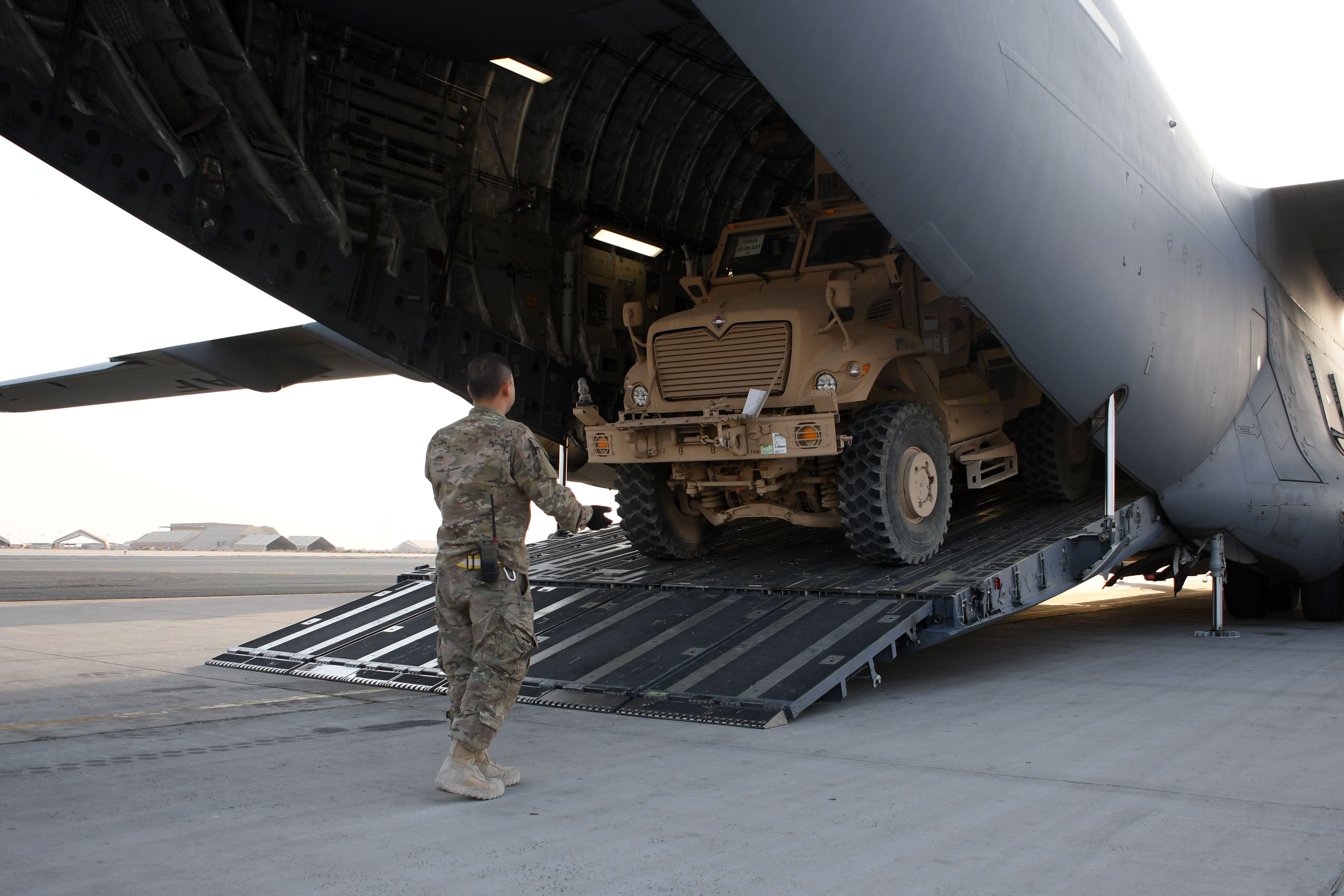
Some of the busiest joint airmen, who have worked in the toughest environments, are the specialized aerial port airmen who comprise "quick reaction teams," Gurski said. There are four teams, consisting of five airmen, which deploy to inspect and load heavy cargo onto aircraft in the field, though she declined to say where they have served.
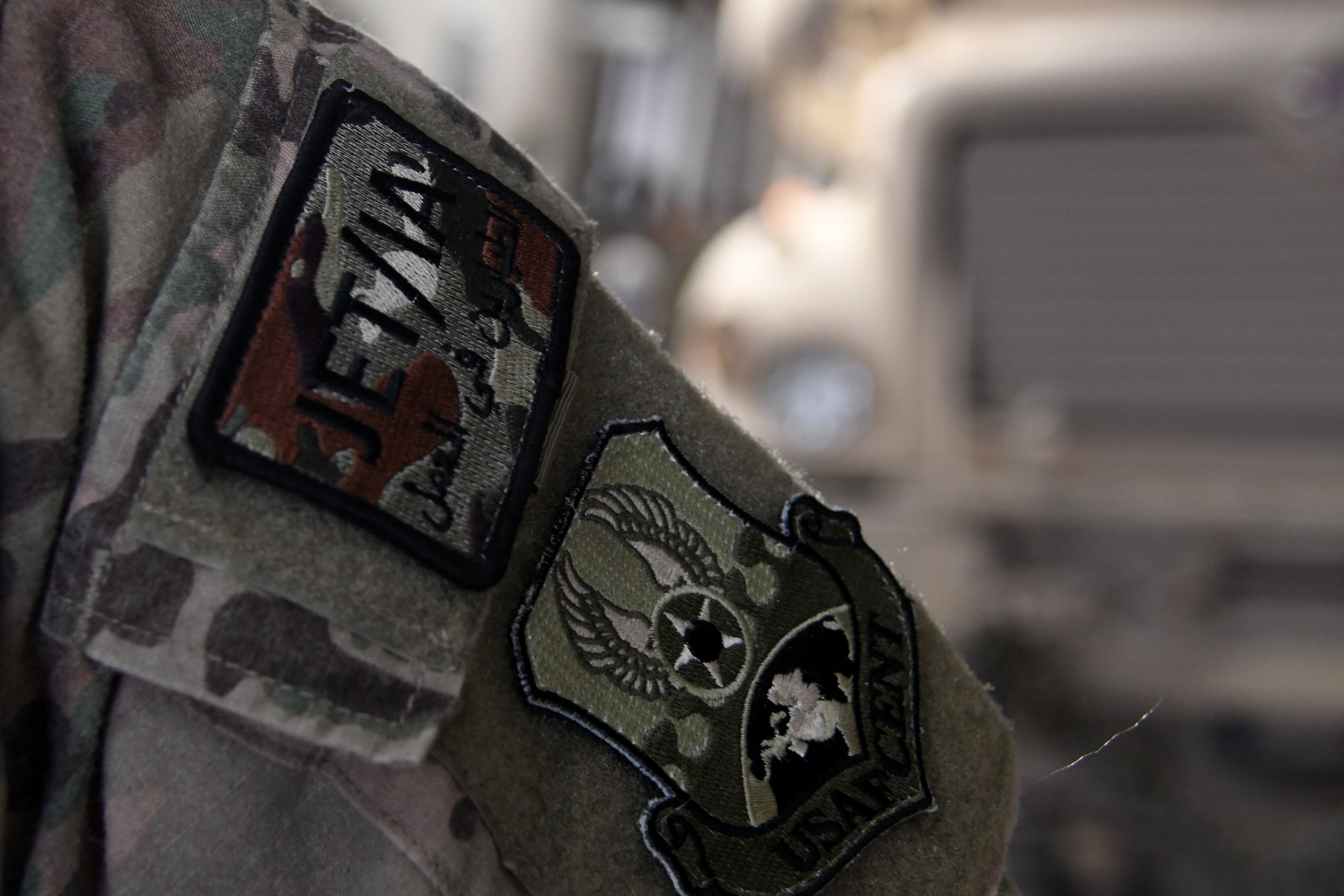
A JET/IA patch is affixed to the uniform of Tech Sgt. Ronald Gowen, a logistician assigned to the 387th Air Expeditionary Squadron.
"They have been to some of the most austere locations in the AOR [area of responsibility], doing their jobs or joint inspections for cargo," Gurski said. "Typically, when they go out to an austere location, it is to unload cargo for a new incoming capability."
Aside from those kind of tactical-level jobs, Gurski said most JET-IA airmen serve in an advise-and-assist role, helping with everything from financial management to fire safety inspection.
Some senior joint expeditionary staff have served with Iraqi units, Gurski said.
"It's part of their job when it comes to the coordination piece and working with our counterparts from Iraq, especially on a diplomatic level," Gurski said. "You almost cannot do the job without having someone in the mix who is going to make sure we are respecting the countries we are here to support."
Gurski said the presence of joint airmen underlines how the fight to defeat the Islamic State is an international effort, and how vital it is to keep it a coalition effort, she said.
"I have met a couple of airmen that actually report first to a British commander and then ... the next level is an Army person, and the next level is a Marine person," Gurski said. "Even in their own chain of command, they may be working with coalition and sister service forces."
That can present a challenge, she said, since joint airmen have to learn "a whole new perspective" on how allies do things and approach fighting the war. But that can also be a good opportunity for them to grow and gain new experiences.
Gurski noted that there are no explosive ordnance disposal airmen serving in a joint expeditionary capacity right now, but there have been in the past. A 2014 article posted by Air Forces Central Command public affairs said that EOD airmen from the 466th AES were supporting Afghanistan operations.
Stephen Losey is the air warfare reporter for Defense News. He previously covered leadership and personnel issues at Air Force Times, and the Pentagon, special operations and air warfare at Military.com. He has traveled to the Middle East to cover U.S. Air Force operations.