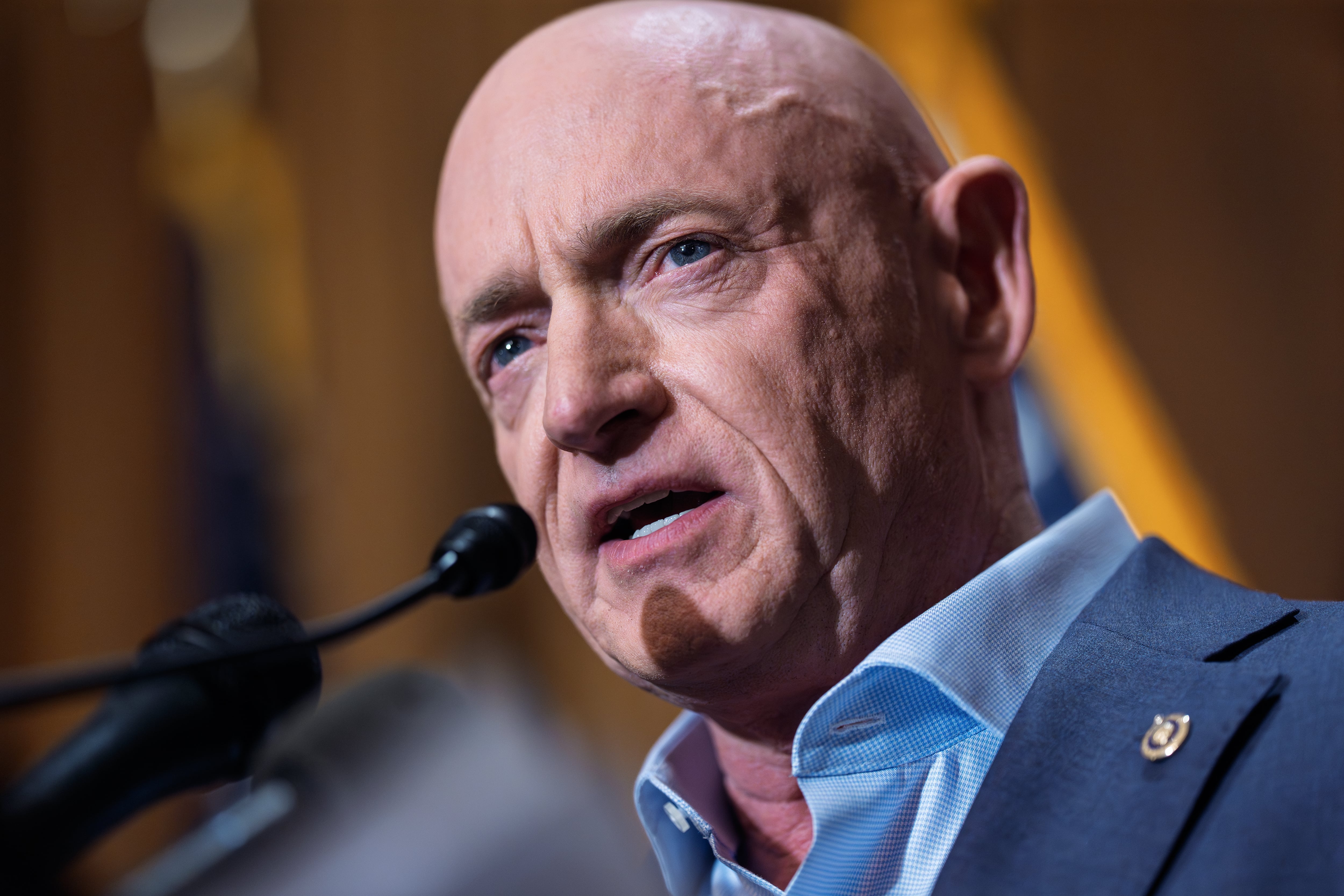
The Defense Department said this week it is accelerating its investigation into Sen. Mark Kelly, D-Ariz., a retired Navy pilot, for allegedly violating military law after he took part in a video with five other Democratic members of Congress urging service members to refuse illegal orders.
The six released the video on social media on Nov. 18, amid ongoing U.S. military strikes against alleged drug-carrying vessels in the Caribbean and eastern Pacific Ocean.
The Pentagon said the preliminary review of Kelly had been escalated to “an official command investigation” for “serious allegations of misconduct,” according to an emailed Defense Department statement.
The Nov. 18 video showed the lawmakers, all of whom served in the military or intelligence community, calling on service members to protect and defend the Constitution, which they said was being threatened not just from abroad, but at home, too.
President Donald Trump responded to the video on Truth Social, calling the elected officials seditious and demanding that they be arrested and put on trial.
On Nov. 24, the Pentagon announced that it would be investigating Kelly and, in a post uploaded to social media, cited a federal law permitting the Defense Department to recall retired service members to active duty for a court-martial.
“If this is meant to intimidate me and other members of Congress from doing our jobs and holding this administration accountable, it won’t work,” Kelly said in a statement at the time.
The National Institute of Military Justice released a statement on Dec. 12 condemning the Pentagon’s investigation into Kelly, claiming his speech was not punishable under the Uniform Code of Military Justice and that “any adverse action against Senator Kelly would threaten core constitutional principles.”
Kelly’s lawyer, Paul J. Fishman, wrote to Navy Secretary John Phelan on Dec. 15 informing him that he and his client were prepared to take legal action if proceedings were to continue, according to a letter obtained by Punchbowl News.
RELATED
“If the executive branch were to move forward in any forum - criminal, disciplinary, or administrative - we will take all appropriate legal action on Senator Kelly’s behalf to halt the administration’s unprecedented and dangerous overreach,” the letter read.
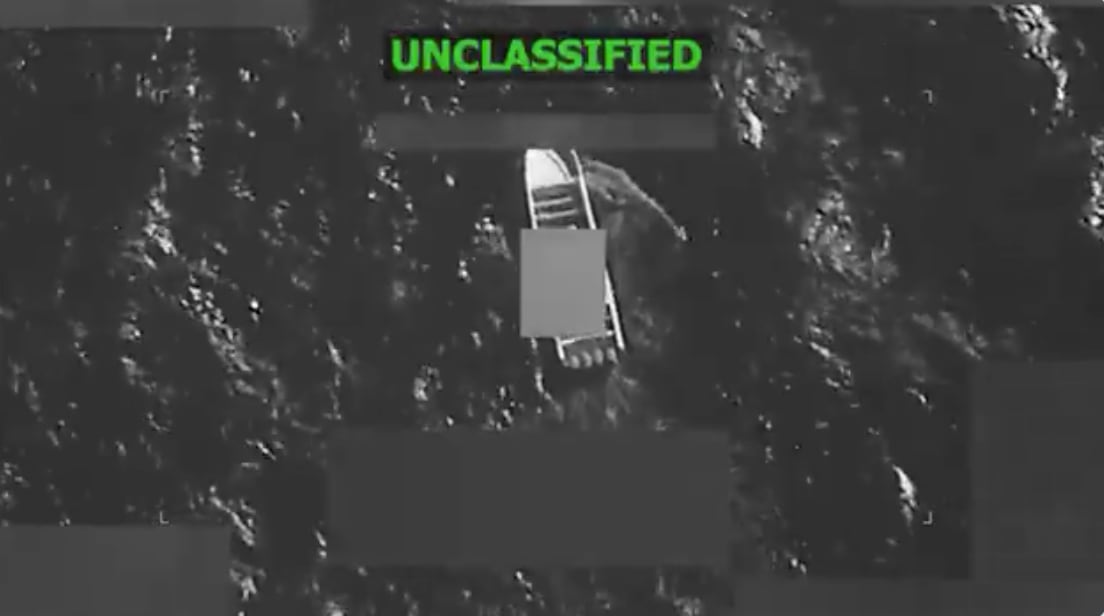
Four days after the Pentagon disclosed its investigation into Kelly for telling service members to disobey unlawful orders, The Washington Post published an article stating that the U.S. military had conducted a double-tap strike on Sept. 2 that killed survivors of an initial military strike against an alleged drug-carrying vessel in the Caribbean, potentially violating U.S. and international law.
The report said that Adm. Frank M. “Mitch” Bradley, who led Joint Special Operations Command during the strike, ordered SEAL Team 6 to fire a second strike after an initial strike killed nine individuals aboard the vessel, leaving two others clinging to the wreckage.
The Sept. 2 strike was the first in a series of strikes the U.S. has conducted in the Caribbean and eastern Pacific Ocean in support of what the Pentagon has labeled counternarcotics efforts.
As of Dec. 16, the Trump administration has disclosed 25 strikes, killing at least 94 people.
Former military JAGs and lawmakers immediately raised concerns over the murky legal territory of the second strike.
A memo from the Former JAGs Working Group, comprised of former military JAGs, said anyone involved in such strikes would be liable legally for committing an unlawful act.
“Since orders to kill survivors of an attack at sea are ‘patently illegal,’ anyone who issues or follows such orders can and should be prosecuted for war crimes, murder, or both,” the memo read.
If the U.S. was involved in a noninternational armed conflict as the Trump administration has said, former JAGs argued the second strike was a war crime, as the survivors were hors de combat, defenseless, and protected by Common Article 3 of the Geneva Conventions, which stipulates that such individuals cannot be targeted through acts of violence or murder.
The survivors of the first strike should have been treated as prisoners of war, they said.
If the U.S. was not involved in such a conflict, which many of the JAGs said was the case, the double-tap strike would qualify as an extrajudicial killing, they argued.
In early December, top congressional leaders met with Bradley and were shown the video of the Sept. 2 strike, including the double-tap strike.
Rep. Jim Himes, D-Conn., who was among those who saw the video and is the top Democrat on the House Intelligence Committee, told NPR that the survivors were shipwrecked, soon to be dead and that the second strike met the definition of a war crime.
Some Republican lawmakers saw the strike as completely lawful.
Sen. Tom Cotton, R-Ark., after being briefed and watching a video of the second strike that killed the two survivors of the first strike, told reporters the two were trying to flip the boat over so they could stay in the fight.
As a result, Cotton argued, the second strikes were “entirely lawful and needful.”
Riley Ceder is a reporter at Military Times, where he covers breaking news, criminal justice, investigations, and cyber. He previously worked as an investigative practicum student at The Washington Post, where he contributed to the Abused by the Badge investigation.