The U.S. Department of Defense has not sufficiently tracked the cost of damages from extreme weather and natural disasters at military installations, hurting its ability to anticipate future disaster recovery needs, according to a U.S. Government Accountability Office report.
Over the past decade, extreme weather and natural disasters have cost the department over $15 billion in damages at military installations, which can affect the ability to execute its mission and impede the installation’s resources that support service members and their families, the 61-page report released Monday says.
At the request of Congress, the office conducted this report by investigating 12 installations that sustained “substantial damage” from a natural disaster from fiscal 2015 to fiscal 2024. The office conducted three in-person site visits, the report says.
The natural disasters that affected the installations examined included earthquakes, wildfires, floods, typhoons and hurricanes, among others.
The office examined the bases, reviewed their documentation and interviewed officials and found gaps in the department’s resilience planning despite previous improvements because of a lack of necessary data or adequate funding.
The report says that the department follows policy that reflects the statutory requirement to include resilience in the ongoing and planned construction projects at installations, but existing guidance does not address how installations should use the resilience plan information to recover from a disaster.
“By including such information in guidance, the military departments can help ensure that installations affected by disasters are better able to incorporate resilience improvements while quickly restoring essential capabilities,” the report reads.
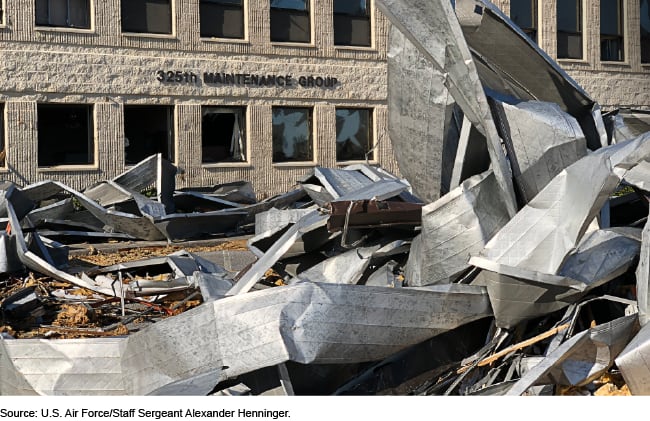
The report highlights the severity of the damage natural disasters inflicted on the bases and the effects it had on their operations. For example, Tyndall Air Force Base in Florida is still impacted by the October 2018 Category 5 Hurricane Michael and its over $4 billion in damages.
The hurricane’s high-speed winds and storm surge flooding damaged all facilities on the base, and 60% of the base was damaged “beyond repair,” the report states. Recovery work, like military construction projects, is still underway and is expected to continue until 2027, per the report.
The office recommended that the department expand the scope of data collection on the costs and effects of extreme weather at installations and establish a process that updates the data as more information becomes available.
The office also recommends that the Army, Navy and Air Force issues guidance to bases on how to use “installation master plan resilience information” when recovering from a natural disaster.
The Defense Department concurred with each recommendation, according to the report.
Cristina Stassis is a reporter covering stories surrounding the defense industry, national security, military/veteran affairs and more. She previously worked as an editorial fellow for Defense News in 2024 where she assisted the newsroom in breaking news across Sightline Media Group.