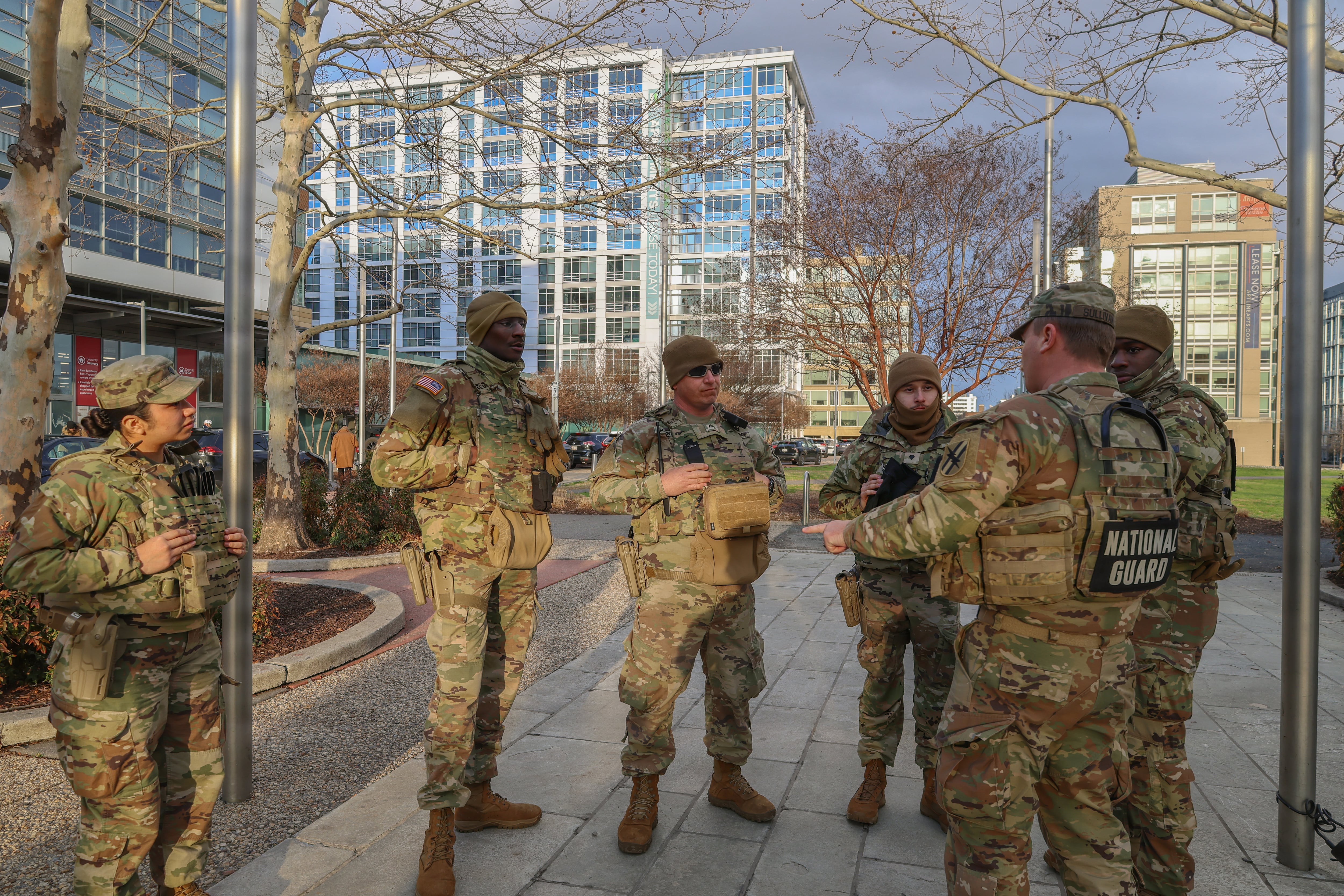
National Guardsmen assigned to the Joint Task Force-District of Columbia have administered naloxone to more than 100 individuals experiencing drug-related emergencies since August 2025, according to a release.
In response to an increase of drug-related overdoses in nation’s capital, JTF-DC integrated the administration of naloxone, commonly referred to by its brand name Narcan, into the required training criteria for patrol personnel.
The additional training comes as part of President Donald Trump’s “Make the District of Columbia Safe and Beautiful” order.
“The D.C. Safe and Beautiful mission is fundamentally about safeguarding the community,” Lt. Austin Coomes, a medical operations officer with the South Carolina National Guard, said in a release. “Equipping our personnel with naloxone provides them with a crucial, life-saving capability to intervene effectively in overdose situations, thereby enhancing the safety and well-being of the District’s residents.”
The Washington, D.C. region saw 2,504 opioid overdose related deaths between Jan. 1, 2017 and Oct. 31, 2023, according to the Office of Chief Medical Examiner of the District of Columbia.
Despite a decrease in fatal opioid overdoses in 2018, the number increased by 32% in 2019. In 2022 the average opioid overdose deaths per month was 38.
All patrol personnel currently assigned to JTF-DC undergo comprehensive, multi-faceted training led by certified medics as a prerequisite for missions.
“Training National Guard members to administer Narcan significantly enhances overall readiness by strengthening their capacity to perform their dual mission, which encompasses both federal and state responsibilities,” Col. Nushat Thomas, the commander of the medical detachment at JTF-DC, said in a release. “This training directly supports their state mission to aid civil authorities in domestic emergencies, including public health crises like the opioid epidemic.”
The majority of JTF-DC personnel have no medical background, but receive training in CPR, Basic Life Support and naloxone administration. Troops are trained to identify signs and symptoms of overdose, provide naloxone and basic aid while securing the scene until medical personnel arrive.
“While D.C. EMS has an excellent response time, having a trained guardsman on the scene to provide basic life-saving care in the first critical moments has proven to significantly increase the survivability of overdose victims,” Coomes said.