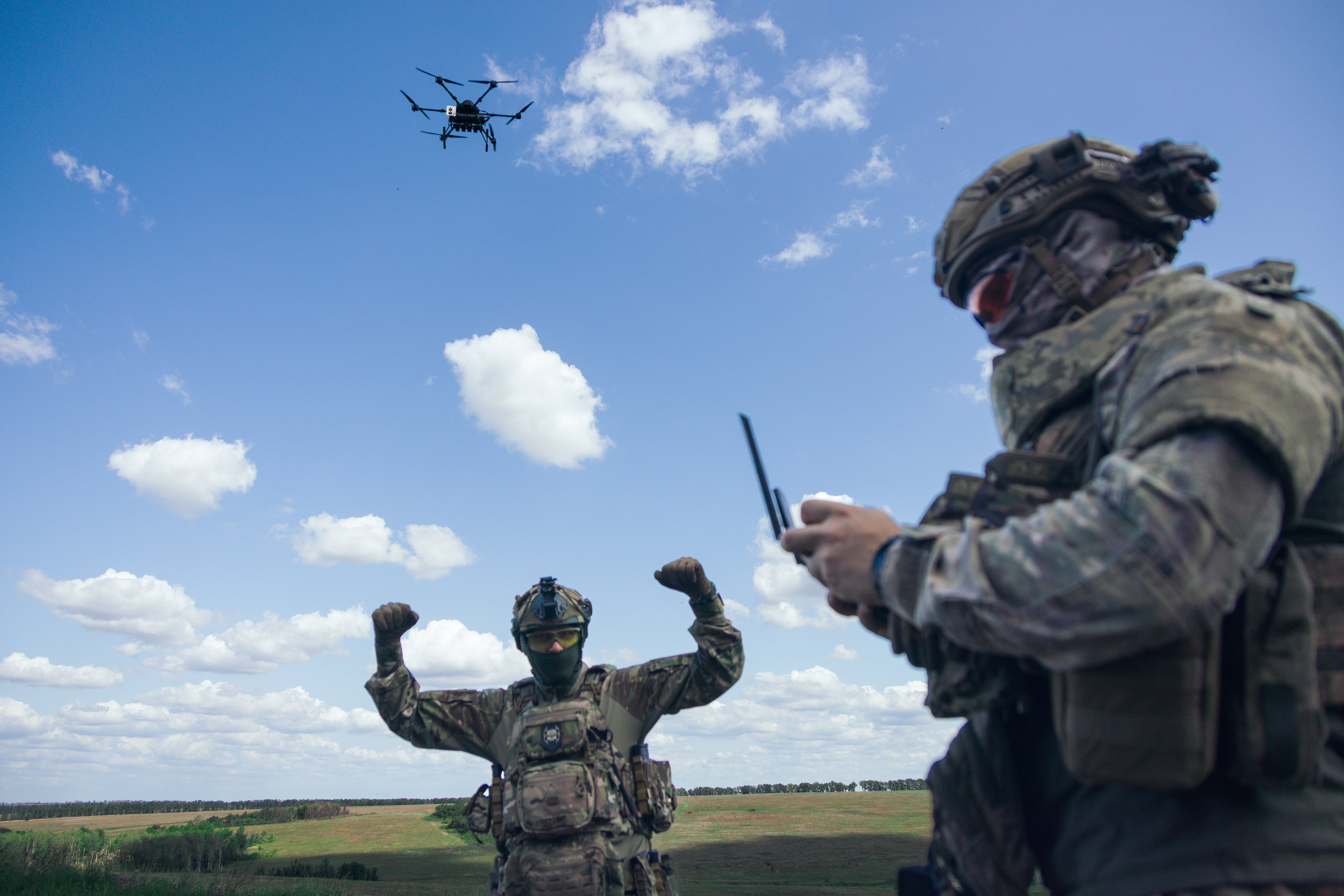
KHARKIV, UKRAINE — The Vampire drone gripped two precious pieces of cargo tightly — a bomb for the Russians and a delivery of still-warm KFC for the Ukrainians in the trench next to them.
Nikoletta Stoyanova, a Ukrainian photographer, watched as the six-armed behemoth took flight before soldiers hurried her into a basement. It was the dead of night in the Kharkiv region of eastern Ukraine, near the besieged city of Kupyansk. The city had already traded hands twice — the Russians had captured the city in the first days of the war, and the Ukrainians liberated it six months later.
Over the last year, the world’s attention has been focused on the U.S. administration’s chaotic push for a peace deal in Ukraine. The high drama of diplomacy between Trump, Putin and Zelensky has stolen the spotlight away from the gray, bloody realities on the battlefield. But the fact is that any settlement will be based on the realities on these frontlines.
It is here that the situation has been seriously deteriorating for Ukraine. The Russians, with a large advantage in manpower and munitions, are making serious advances into Ukrainian territory. New drone technology, and a lack of Western countermeasures, have aided them in slowly breaking down Ukraine’s weary troops.
The Ukrainian soldiers who had strapped the munitions to the drone hurried Stoyanova into the basement, where another group of soldiers are staring intently into screens, controllers in hands as if they were playing video games. These drone pilots are now Ukraine’s most crucial defense against the advancing Russians. Warfare has been revolutionized on these battlefields — and America is far behind in its understanding of how it operates.
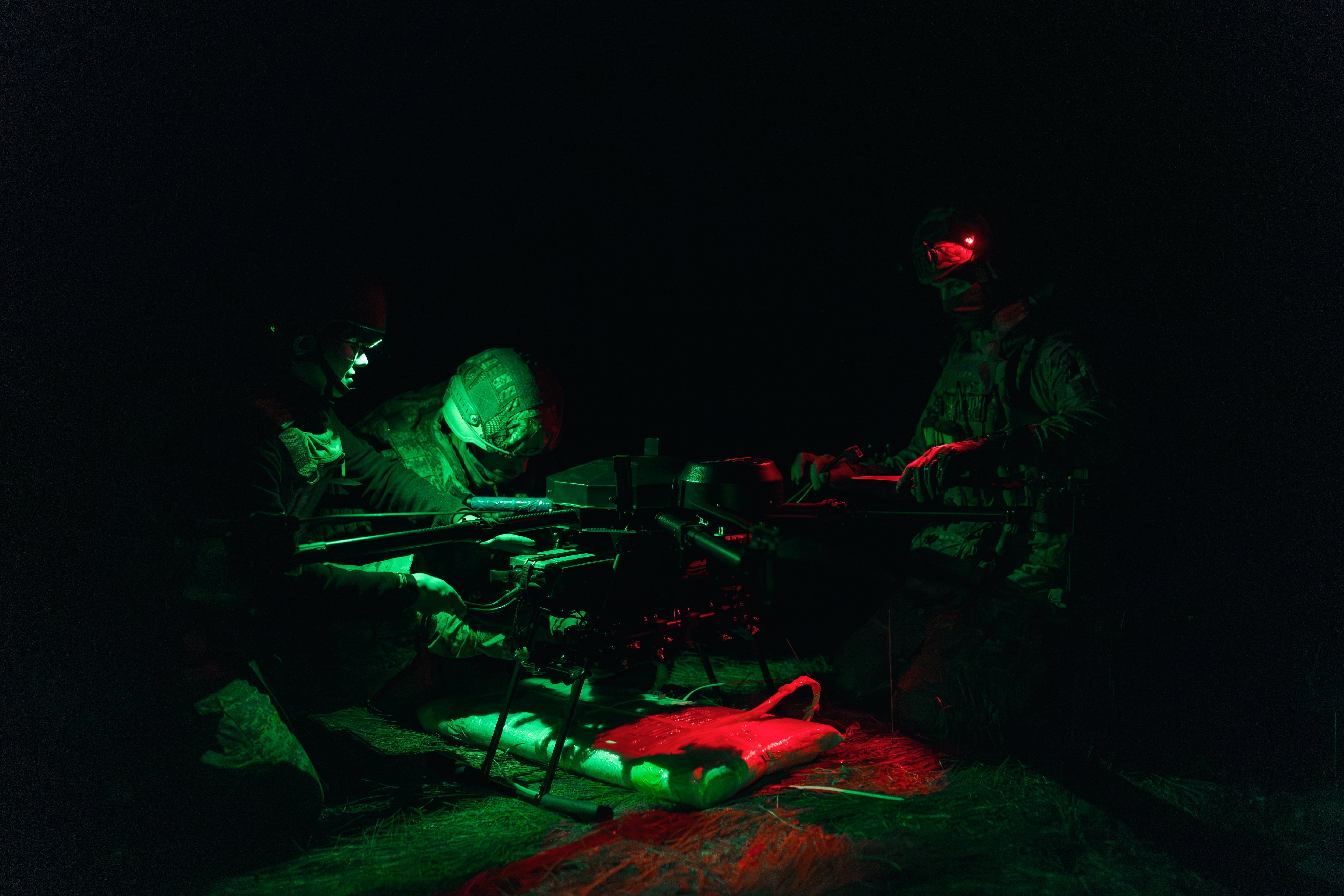
She had gone to their base, in the embattled East, to see how the sky, full of thousands of drones, were changing modern warfare.
“Everything at the front line must be done at night, logistics are awful,” Stoyanova said from Ukraine’s Donetsk region. “They want to get as close to our cities as they can so they can terrorize them as much as possible with drones.”
Last time here she heard loud artillery, but the drones that replaced them are quiet killers.
“The war is more silent, and more deadly,” Stoyanova noted.
Ill-prepared for modern war?
What observers see on the dark, drone-infested front line looks nothing like the battlespace that America and its allies have been training their troops for.
Belatedly, the Pentagon is starting to take notice. A Department of Defense account was widely ridiculed among Ukraine watchers when it posted a video of a training exercise asking viewers whether they had ever watched a drone drop a grenade.
In fact, anyone can see thousands of such videos on Telegram channels and X accounts, some going back to as early as the first year of the war in Ukraine.
In July, Defense Secretary Pete Hegseth led a tour of a Defense Department drone exhibition, calling drones “the biggest battlefield innovation in a generation, accounting for most of this year’s casualties in Ukraine.”
“Our adversaries collectively produce millions of cheap drones each year,” he said, adding that the U.S. is trailing behind.

Pentagon brass bragged that they had lowered the concept-to-development time for such weaponry from six years to 18 months. But in Ukraine, the newest battlefield development can be obsolete in weeks.
The U.S. is still far behind Ukraine and peer rivals such as China and Russia when it comes to integrating drone technologies into the modern battlespace.
Some U.S. companies have sent drones to be used in Ukraine, but as the Wall Street Journal reported, and Ukrainian soldiers have confirmed, Western drone technology does not measure up.
This mismatch reflects deeper problems in how the U.S. is still thinking about procurement and warfighting. In the early days of the war, the U.S. supplied many high-tech, expensive but powerful systems that radically improved Ukraine’s battlefield fortunes. But as the war has ground on, and the Russians developed countermeasures, developing a quantity of cheap systems has become far more important than a few high-ticket items.
As Dronesense reported, “a typical U.S. commercial drone intended for military use can cost upwards of $80,000, while a basic Ukrainian FPV attack drone costs under $500. This 160-fold cost difference makes the American systems economically unsustainable in a conflict that consumes approximately 10,000 drones per month. … Modern, high-intensity warfare … favors mass, adaptability, and attrition tolerance."
In Ukraine, drones have also added an element of civilian involvement into military procurement, with many ordinary civilians transforming their garages, basements and bedrooms into makeshift drone factories, while others hold crowdfunders to buy cheap commercial drones online that can be refitted for military purposes.
This allows average Ukrainians to contribute to their country’s war effort much more directly than they ever could before, with channels like YouTube and Telegram teaching how to assemble drones and ammunition in minutes.
Ukrainian soldiers complain that U.S. companies lack an understanding of electronic warfare, as well as the different types of air defense and other countermeasures that both sides use against the drone threat. If the U.S. is ever dragged into a large-scale war against a peer or near-peer adversary like China or Iran, it will be ill-equipped for a drone-heavy background like that in Ukraine.
On the ground in Ukraine
Back in Kharkiv, soldiers must drive navigating via hand torch until the last kilometer or two of their destination, then they must navigate by memory.
“Everything has changed because of drones. … Now there are hundreds of guys putting up nets over the road,” said Stoyanova. Other men by the side of the road wait with drone detectors and shotguns on the roadside ready to shoot.
Because of this, everything has become more dangerous under the dronescape, from the rotation of troops to resupplying front-line infantry.
“With shells, you hear the crack, and the whistle, and have a couple of seconds to hide or take cover. With the drones, you don’t hear anything until the explosion,” a senior official in the military administration stationed in Kherson, a liberated city in southern Ukraine that is under constant threat of Russian drone strikes, said.
Unless the U.S. adapts, the next war it fights may be just as silent, and far more deadly.