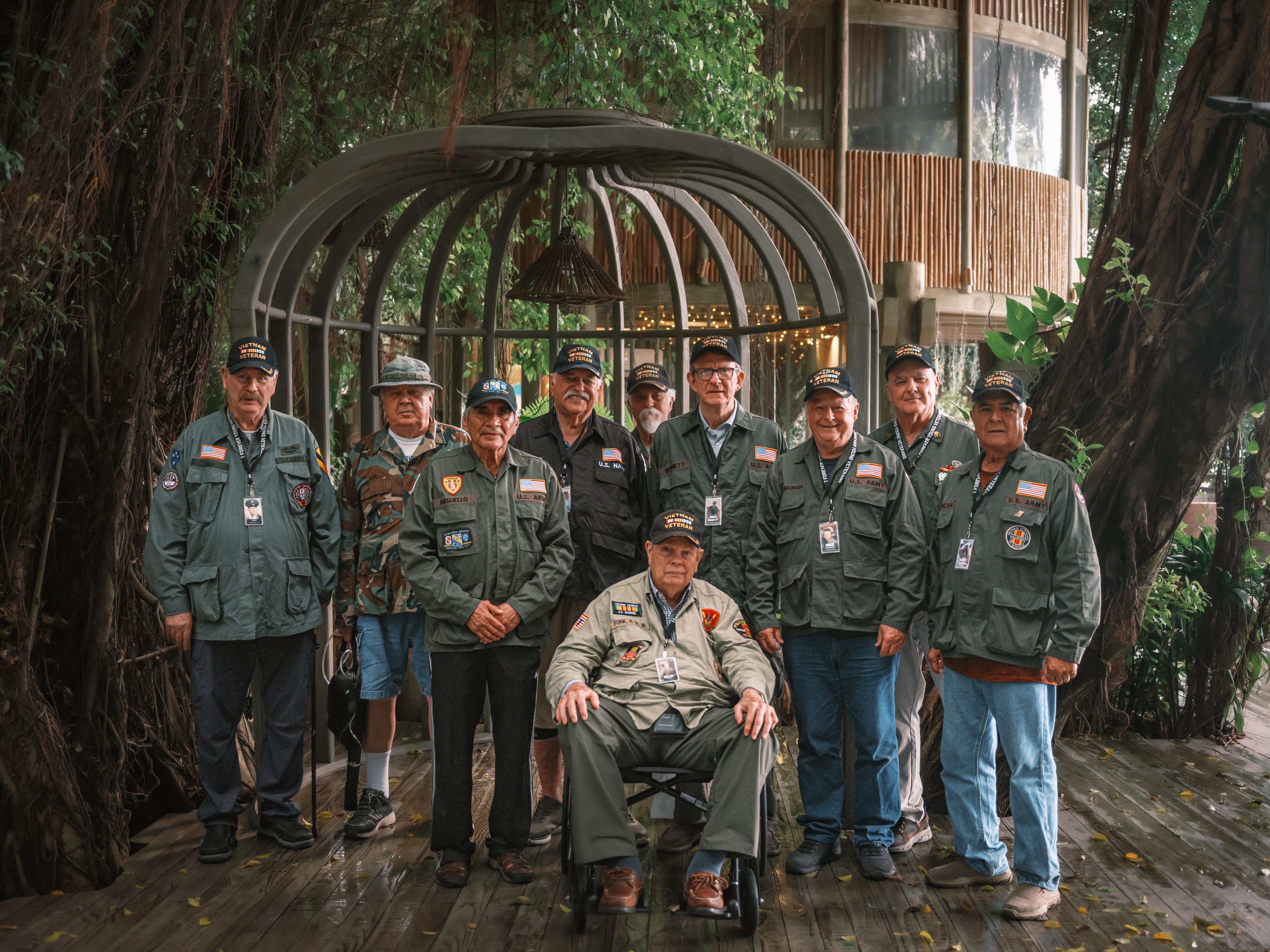
It was a homecoming of sorts — decades overdue.
A dozen Vietnam veterans returned to the Southeast Asian country — with all but one having not been back since their combat boots left the soil of Vietnam for the last time some 50 years ago.
“I got back from Vietnam in ‘68 and luckily, I didn’t experience any disrespect,” Jerry Melcher, a combat medic in the U.S. Army told Military Times. “Just experienced nobody wanted to acknowledge or talk about it. So I went home, took off my uniform and kind of stuffed it in my back pocket.”
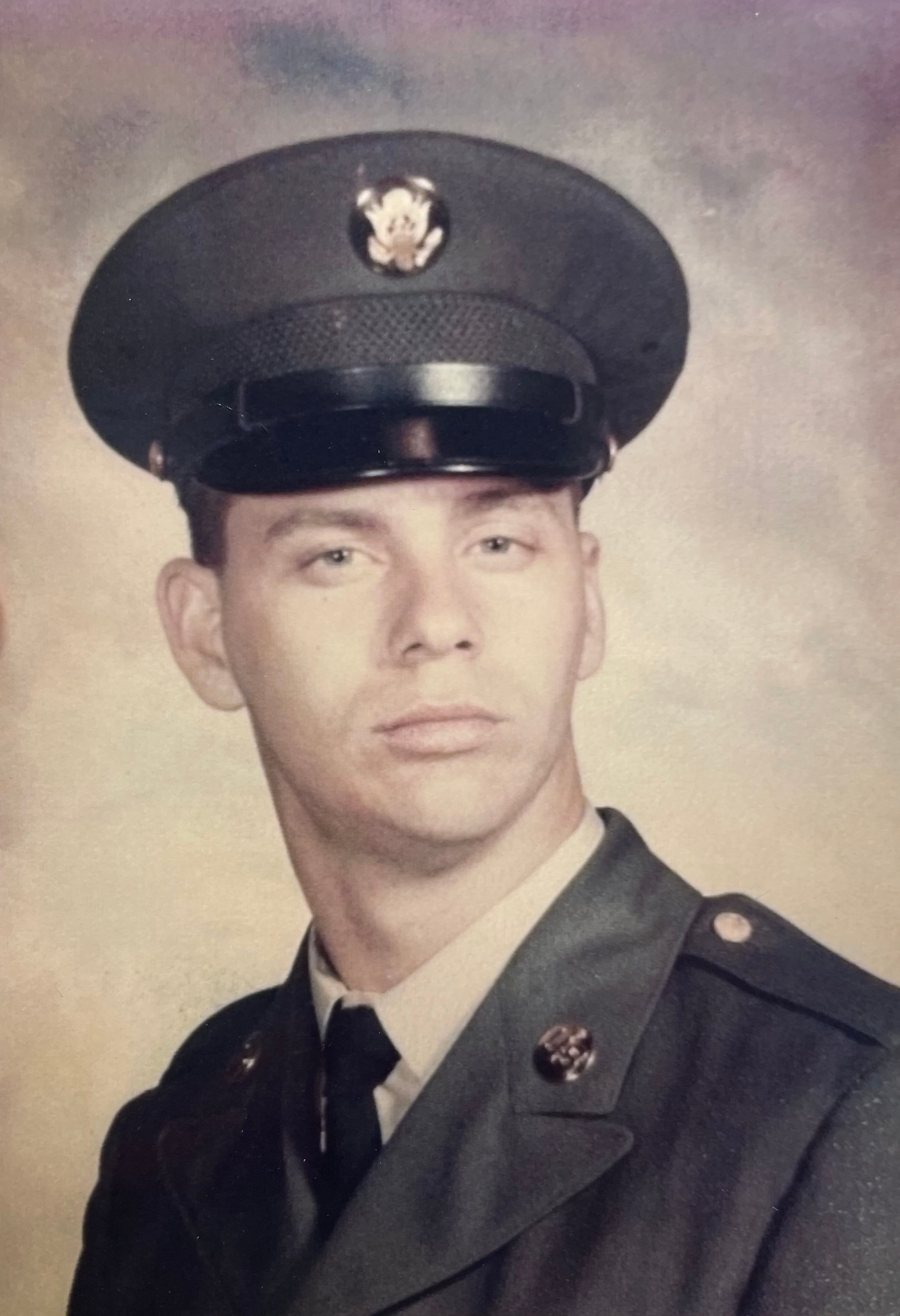
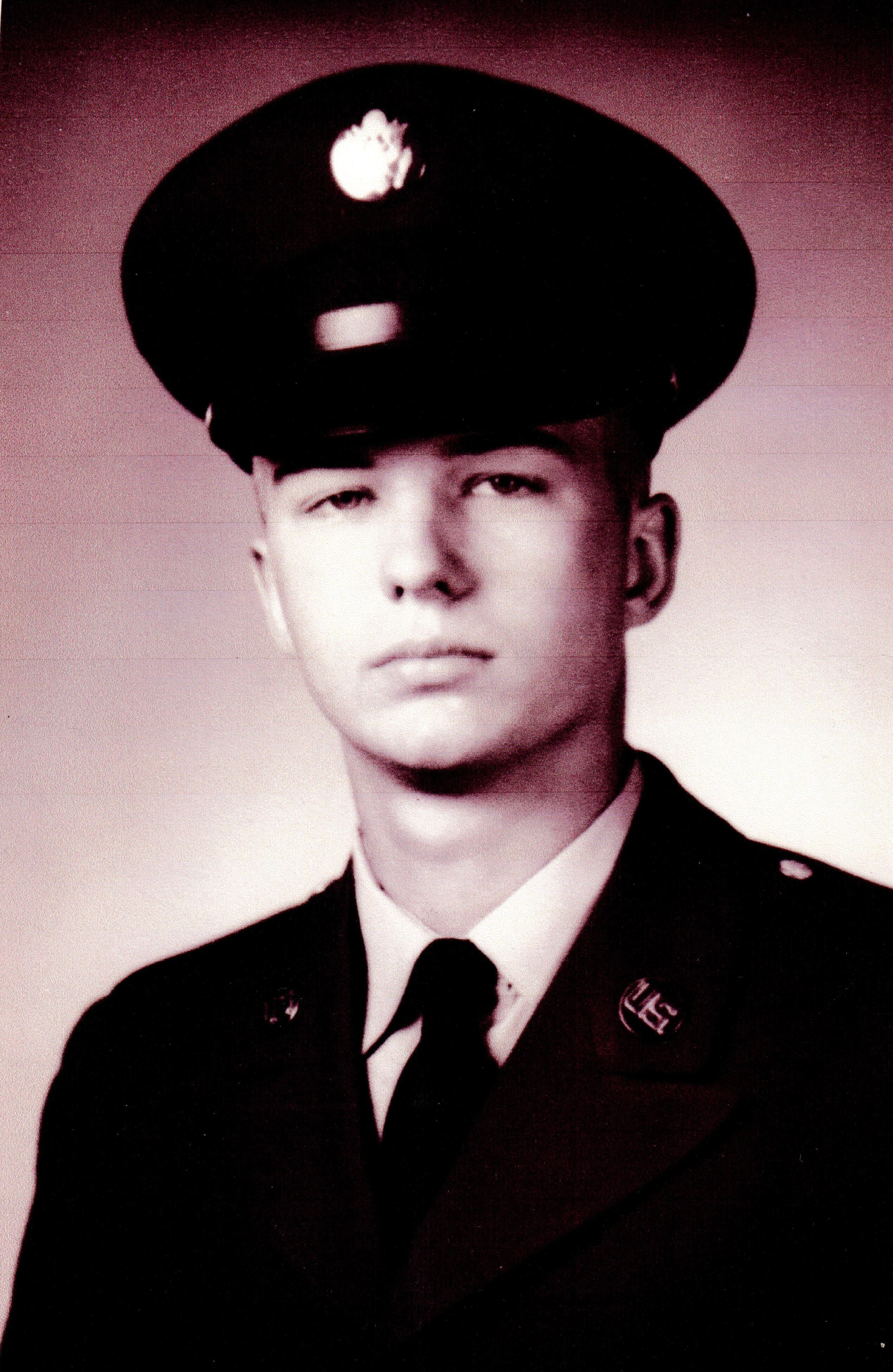
Rudy Dixon, who served in an Army recon team from 1970-1971, had a similar experience.
“[I] didn’t talk about it much because didn’t nobody want to hear about it back then,” he said.
The veterans, who range in age from 74 to 80, represent America’s decades-long war in almost every facet by way of air, land and sea, including: a former infantryman, helicopter pilots, combat medics, a Navy boatswain’s mate and Dixon, a former recon soldier.
All 12 men were part of a weeklong trip earlier this month, organized by the Eagle Society, a Nashville-based nonprofit, and Forever Young Veterans, aimed at supporting, honoring and preserving the memory of the veterans who fought in one of America’s most contested wars.
The Eagle Society has done several trips with veterans, including a pilgrimage to Okinawa with veterans of the Second World War, but the trip to Southeast Asia, dubbed “Vietnam Revisited,” was a first for the society.
“How do we honor these veterans? How do we elevate a level of dignity and purpose and ability and honor?” Michael Davidson, founder of Eagle Society, told Military Times in a phone call prior to the eight-day trip. “Let’s help the country digest because … we’re really still processing that era. We are still dealing with issues that reverberated since that era — everything from geopolitics to civic division. So how do we use experience to expose us to all those issues and help the veterans while we’re doing it?”
The war in Vietnam represented a fracture in American society and politics, which ultimately gave way to something new entirely. For the veterans, however, shedding the uniform, did not shed the memories.
“A lot of my friends [came] back and got on drugs and alcohol,” Dixon said. “We were sort of poor when I grew up, so all I had on my mind when I got back was, is going to work.”
“People that’s never been in combat … you can tell them something and you can tell they don’t believe it. They can’t understand it because they’ve never experienced it,” Dixon continued. “A lot of things I just never would say anything about because I knew it be too unbelievable to them. So most people that I’ll talk to about it is [with] other veterans.”
After his tour in Vietnam, Melcher, the Army combat medic, became motivated to heal himself — and his fellow veterans. The combat medic-turned-Army psychologist became a mental health specialist, “in part for self-help,” Melcher said.
“That’s supposed to be some light-hearted humor,” Melcher quipped.
“I never heard the term post-traumatic stress disorder. I just didn’t know what it was,” he continued. “And I didn’t talk to anybody and no one talked to me. Even my friends, my best buddy from high school, is a vet. We never talked about it.”
But even as a medic, Melcher was called to help.
“I talked with guys a lot, meaning, not only was I treating their physical sense, but trying to treat other things. When people got ‘Dear John’ letters and wanted to talk to somebody … I don’t know why, I just wanted to help and wanted to listen, and that’s what I ended up doing.”
Vietnam Revisited presented an opportunity for veterans to talk and reminisce among one another, but as Davidson put it, “when you get on the ground, you see, touch, feel, learn … it deepens engagement.”
The trip took participants through Hanoi, Da Nang, Hue and Ho Chi Minh City, however, the veterans “could opt out of anything” they wanted to opt out of, said Davidson.
“We try to make sure we our goal is to create the space for them, whatever it is, whatever version of grieving, healing, restoring, renewing, any version of it. We are going to respect and support their process. So our goal is to create options now,” Davidson added.
Unrecognizable
For veterans like Dixon, as a member of 1st Battalion, 52nd Infantry Regiment, a combat unit assigned to the 198th Infantry Brigade within the 23rd Infantry Division Americal Division, his memories of Vietnam don’t include city campaigns, but crawling through jungle tunnel complexes and traversing dense foliage against the threat of a hidden enemy.
His recon team, according to Dixon, worked in and off firebase LZ Stinson — going out for seven days, coming back in for four and rotating back and forth like that for nearly a year.
The war-torn nation he left was very much not the same more than 50 years on.
“I don’t know what I was expecting when I went back, but it was a totally different country,” said Dixon. “It wasn’t even the same place. I’ve never seen such a beautiful place in my life. … The beaches the South China Sea there and China beach and all it was just, man, it looked better than Hawaii.”
“I’ve never seen more courteous people. I mean, they acted like they wanted you there. They, you know, done everything they could to make your stay there as pleasant as they could. And I just, I couldn’t get over how the people were there toward us,” Dixon said of his time back in Vietnam.
For Dixon, memories of his service include shards of light.
While in basic training, a senior drill sergeant had found out that Dixon was likewise from Mississippi. Every morning while standing at attention, Dixon recounted, “he’d walk down that line and he’d get to me and he’d put his nose right, nearly against my nose, and he’d say, ‘Dixon, you ain’t never gonna make no soldier.’”
“And I’d say, ‘I know it, won’t you let me go home?’”
Claire Barrett is an editor and military history correspondent for Military Times. She is also a World War II researcher with an unparalleled affinity for Sir Winston Churchill and Michigan football.