
The Department of Defense on Tuesday unveiled a $1.5 trillion budget proposal for fiscal 2027 — a 42% year-over-year increase and the most expensive military outlay in modern history.
“We’re facing one of the most complex and dangerous threat environments in our nation’s 250-year history,” Jules J. Hurst III, the under secretary of war and chief financial officer, told reporters at a briefing at the Pentagon. “Our adversaries are rapidly advancing capabilities across every warfighting domain: in the air, land, sea, space and cyberspace, while years of underinvestment has strained our industrial base.”
“This is a generational investment in the United States military,” Hurst added.
According to officials, President Donald Trump’s key priorities include investments in the “Golden Dome” — a multi-layered defensive shield intended to safeguard the American homeland — as well as in drone warfare, artificial intelligence, data infrastructure, and the defense industrial base.
Under the proposal, each branch of the military would receive a substantial increase in funding, with appropriations rising by 33.6% for the Air Force, 24.3% for the Navy and 23.9% for the Army. The framework also sets out pay raises for service members, depending on rank, ranging from 5 to 7%.
In line with the president’s ambition to construct a “Golden Fleet” — an expanded Navy with a new line of Trump-class battleships as its centerpiece — more than $65 billion would be allocated to procure 18 warships and 16 support ships. This represents the largest shipbuilding request since 1962, officials said.
When it comes to the evolving battlefield, the Pentagon is slated to make an unprecedented commitment to drones and the systems designed to counter them. $53.6 billion would be earmarked for autonomous drone platforms and contested logistics, while another $21 billion would be reserved for munitions, counter-drone technologies and advanced systems like the Collaborative Combat Aircraft and MQ-25.
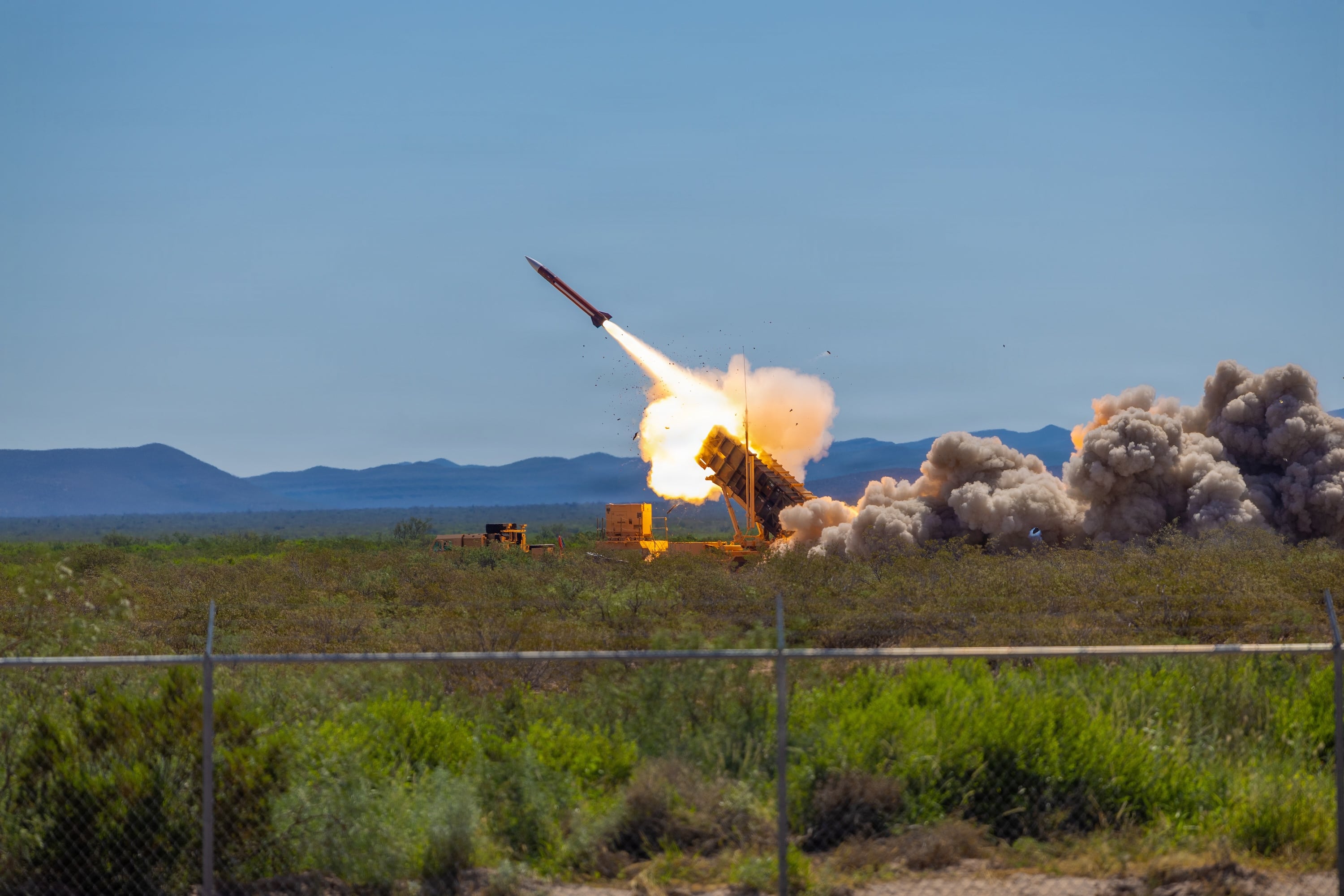
The department is also seeking to commit $64.5 billion toward developing next-generation munitions systems, including missiles, armored vehicles and helicopters. The package encompasses systems such as Patriot and THAAD interceptors, Precision Strike Missiles and the Armored Multi-Purpose Vehicle.
RELATED
Officials noted, however, that the funding surge was drawn up prior to the United States’ launch of Operation Epic Fury on Feb. 28, and is therefore not expected to focus on the needs of the campaign against Iran. Defense Secretary Pete Hegseth has previously indicated that the Pentagon would seek roughly $200 billion in supplemental funding to sustain the Iran operation and replenish inventories.
The budget request is expected to face fierce congressional debate in the weeks to come.
In early April, a broad coalition of 289 groups sent a letter to lawmakers urging them to reject Trump’s “grossly irresponsible” budget request.
“Funding an unaccountable Pentagon by more than $1 trillion while underfunding human needs programs undermines our security by preventing us from investing in the shared prosperity that comes from more housing, health care, climate and public health protections, ending hunger, and providing quality public education,” the letter read.
Trump, at a closed-door Easter lunch, defended the Pentagon budget in terms of national security priorities.
“We’re fighting wars,” the president told guests, according to a video that was published — and later deleted — by the White House. “It’s not possible for us to take care of daycare. Medicaid, Medicare, all these individual things. They can do it on a state basis, you can’t do it on a federal. We have to take care of one thing: military protection. We have to guard the country.”
Tanya Noury is a reporter for Military Times and Defense News, with coverage focusing on the White House and Pentagon.


